An 18-Year Recruitment Business With 1000 Clients and No Clear Way to Know When They Were Hiring
THE PROBLEM
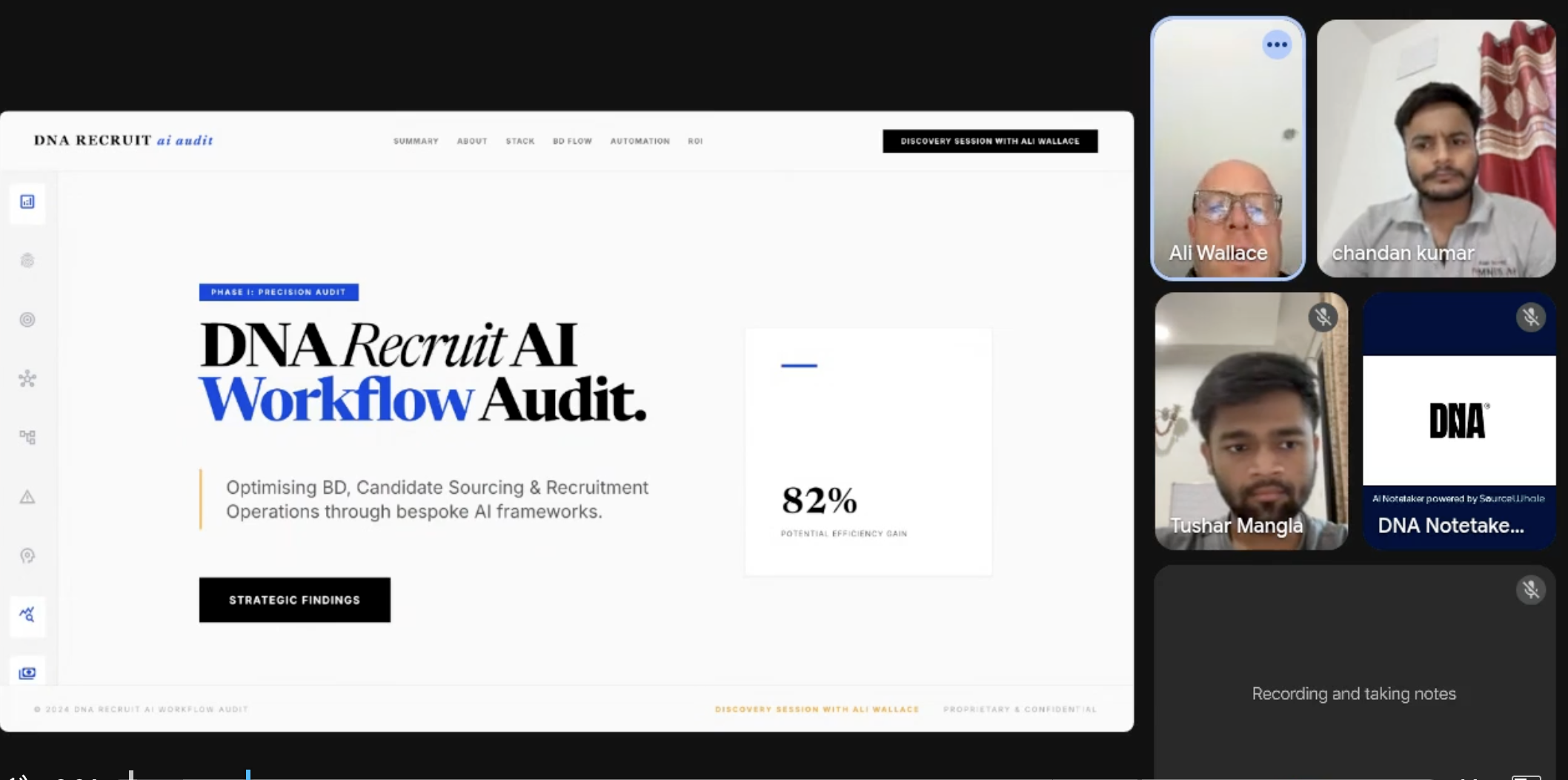
Ali had been building DNA Recruit for 18 years.This was not a small operation.The business had a sourcing team in India, account managers in South Africa, and over 1000 clients with signed terms of business.There was also a structured internal system covering everything from sourcing to placement and aftercare. Automation was not new to the business.Tools had already been explored and implemented.The real question was not whether AI should be used, but where it actually fit and where it did not. Inside the business, one major gap stood out.Over 1000 existing clients were being managed without any system to track when they were hiring.These were long- term relationships, but re - engagement depended on manual checks, database reviews, and periodic outreach.There was no visibility into real - time hiring activity.No alert when a job was posted, and no trigger to act at the right moment.The opportunity already existed within the business, but it was not being observed when it mattered. This led to another issue.Outreach was often going to people who were not hiring, while missing those who actively were.Regular emails helped maintain visibility, but they do not align with actual demand.Without timing based on intent, most outreach naturally landed too early or too late, resulting in lower response rates and missed opportunities.
THE ROOT CAUSE
The operational side showed similar patterns.Multiple tools like Bullhorn, Sourcewell, Hinterview, and LinkedIn were being used, but without a unified system.The team constantly switched between platforms to manage information.While each tool worked individually, the lack of a single view created friction and wasted time across the team. Even the database reflected this inefficiency.Years of contact data were still being reviewed and updated manually.This was work that required consistency, not judgement, yet it was consuming valuable human effort. At the same time, candidate - to - job matching was not happening in real time.Candidates were entering the system from different sources, but there was no immediate way to connect them with companies that were actively hiring.Matches were either found manually or discovered too late.
THE SOLUTION
During the audit, a few clear opportunities emerged.One of the most impactful was continuous monitoring of existing clients.Instead of relying on manual effort, a system could track client websites, LinkedIn, and job boards, and instantly flag when a company starts hiring.This shifts outreach from guesswork to precise timing. Another opportunity was identifying new companies based on hiring activity rather than broad outreach.When companies are approached at the moment they need help, the conversation becomes relevant instead of interruptive. The database itself could be maintained continuously through automated enrichment, keeping information accurate without periodic manual effort.Similarly, the existing tool stack could function as a single system by bringing data into one interface, reducing switching and improving visibility. Candidate matching could also be handled instantly.As soon as a candidate enters the system, their profile can be structured and matched with companies that are actively hiring, removing delays and surfacing opportunities faster.
THE RESULT
One thing remained clear throughout the conversation.The goal was not to automate everything and lose the human side of recruitment.That concern is valid.The role of AI is not to replace judgement, but to remove the work that never required it in the first place.Monitoring, updating, and tracking are consistency problems.Understanding people, evaluating fit, and building relationships remain human responsibilities.
THE TAKEAWAY
In businesses that have spent years building strong client relationships, the biggest gap is often not lead generation.It is timing.Knowing exactly when those clients need help. Because by the time hiring becomes visible manually, others have already reached out. A system that continuously observes does not replace relationships.It simply ensures they are activated at the right moment.