How a Biotech Recruiter Spent $80,000 With Zero Placements And What Became Clear
THE PROBLEM
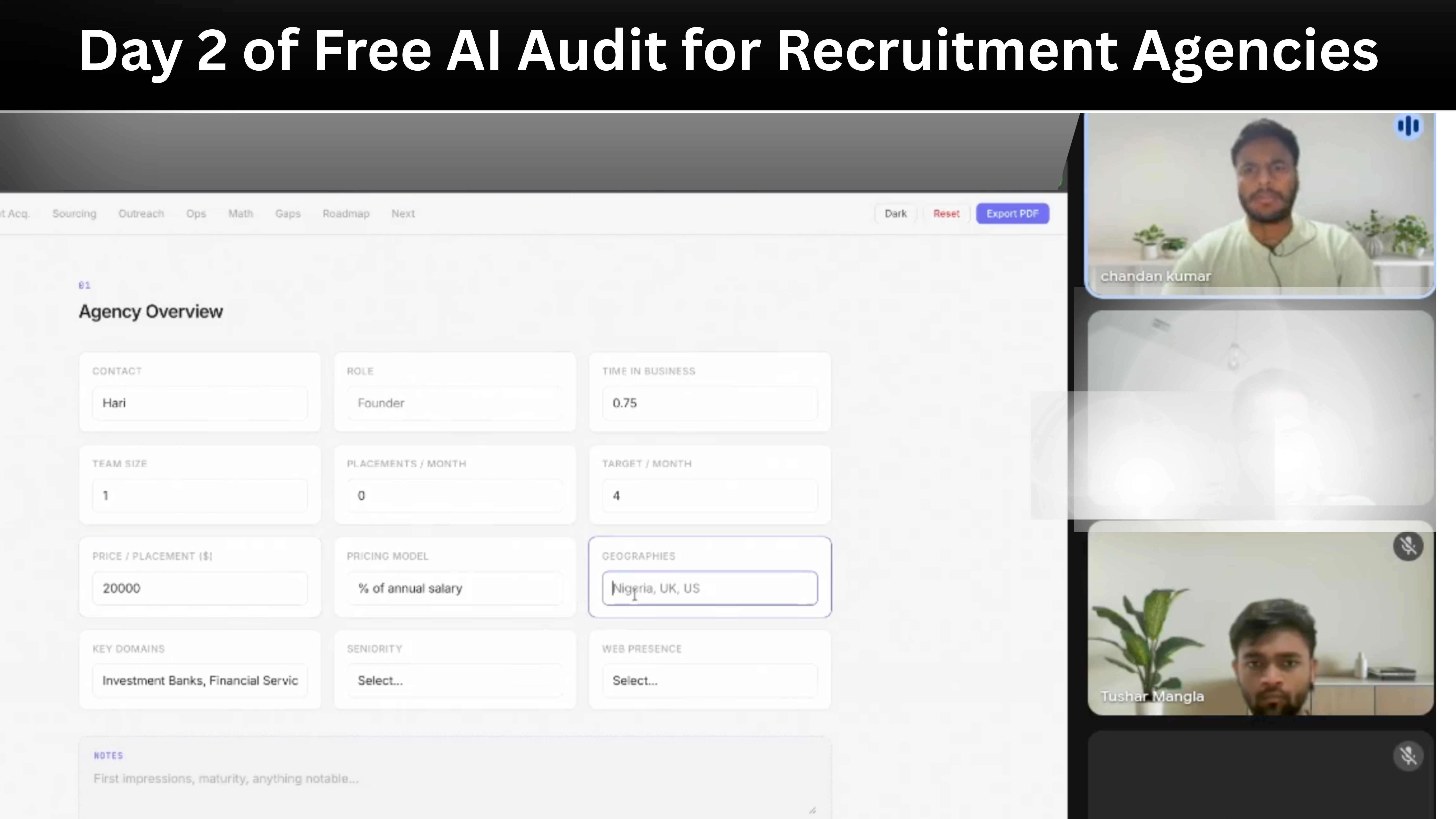
When Hari decided to start his recruitment business, he did not enter casually. He had a strong background in biotech, including experience at companies like Procter & Gamble, and chose to focus on clinical and R&D hiring, a space he understood deeply. He invested $80,000 into the business. This included franchise fees, access to training, tools like ZoomInfo, and an ATS. For eight months, he worked full-time, putting in hundreds of hours into outreach and candidate conversations. And yet, there were zero placements. At first glance, it looked like a market issue. Biotech hiring had slowed down, and that seemed like the obvious explanation. But once the full workflow was examined, a different pattern emerged. This was not a market problem. It was a systems problem.
THE ROOT CAUSE
The first issue was outreach volume. Hari was sending around 200 to 300 emails per month, all manually. There were no sequences, no automation, and no structured follow-ups. In recruitment, results are heavily driven by volume and consistency. At that level of activity, even a decent response rate produces very few conversations. Timing was working against him. His process involved finding job postings that were already a few days old, researching the company, identifying the decision maker, and then reaching out. By that time, the hiring manager had already been contacted by multiple recruiters. His message was not early, it was late. Follow-up was another gap. While the industry typically requires multiple touchpoints across email and LinkedIn, his outreach often stopped after one or two attempts. Without a system to manage follow-ups, opportunities were being dropped too early. There was also unused leverage inside the business. Hari had built a LinkedIn network of around 5000 connections. These were relevant, first-degree contacts. Yet they were not being used as part of a structured outreach or engagement strategy. At the same time, candidates were coming in consistently. Around 50 to 100 candidates per month were reaching out, sharing resumes, and having conversations. But there was no system to connect these candidates to active job opportunities. Every match depended on manual effort, which meant many opportunities were either delayed or missed entirely. Basic visibility was also missing. No tracking on website activity, no data on performance.
THE SOLUTION
A few core shifts stood out. Instead of manually searching for jobs, there was an opportunity to continuously track new job postings across relevant platforms. This would allow outreach to happen within hours of a role being posted, not days later. Decision-maker identification and outreach could happen in a structured way, ensuring that every relevant opportunity is acted on quickly and consistently. Follow-ups did not need to depend on memory or manual effort. A simple system could ensure that every prospect is contacted multiple times across channels. The existing LinkedIn network could be used more intentionally, turning passive connections into active conversations. Candidate data could also be used more effectively. Instead of storing resumes, profiles could be structured and matched against active hiring needs, allowing faster and more relevant outreach. Even basic tracking, such as website analytics, could provide clarity on what is working and what is not.
THE RESULT
The Numbers That Put It In Perspective: In biotech recruitment, a single placement can be significant. For example, a $150,000 role at a 20 percent fee results in a $30,000 placement. Compared to that, the gap was not opportunity. It was the absence of a system that could convert effort into outcomes. The goal is not to work more. It is to ensure the work being done actually converts.
THE TAKEAWAY
For many solo recruitment founders, the instinct is to question the market when results are not coming. But often, the issue is not demand. It is structure. Is outreach happening early enough. Is follow-up consistent enough. Is the volume sufficient for the math to work. Without systems, even strong effort produces weak outcomes. With the right structure in place, the same effort starts compounding. A system that continuously observes does not replace relationships. It ensures they are activated at the right moment.